Getting sued for a debt can feel scary. The papers from the court might look confusing or hard to understand. Don’t worry, you’re not alone. We’ll help you go through them step by step.
One of the papers you get will be called a Summons. This is the official notice that someone is suing you.
It tells you:
- Who is suing you,
- Which court the case is in, and
- Your first court date (or when you must file your first court papers if you're sued for more than $50,000).
Below we walk you through how the information appears on the form Summons created by the courts. The debt collector does not need to use this form, but they do have to provide you with the same information.
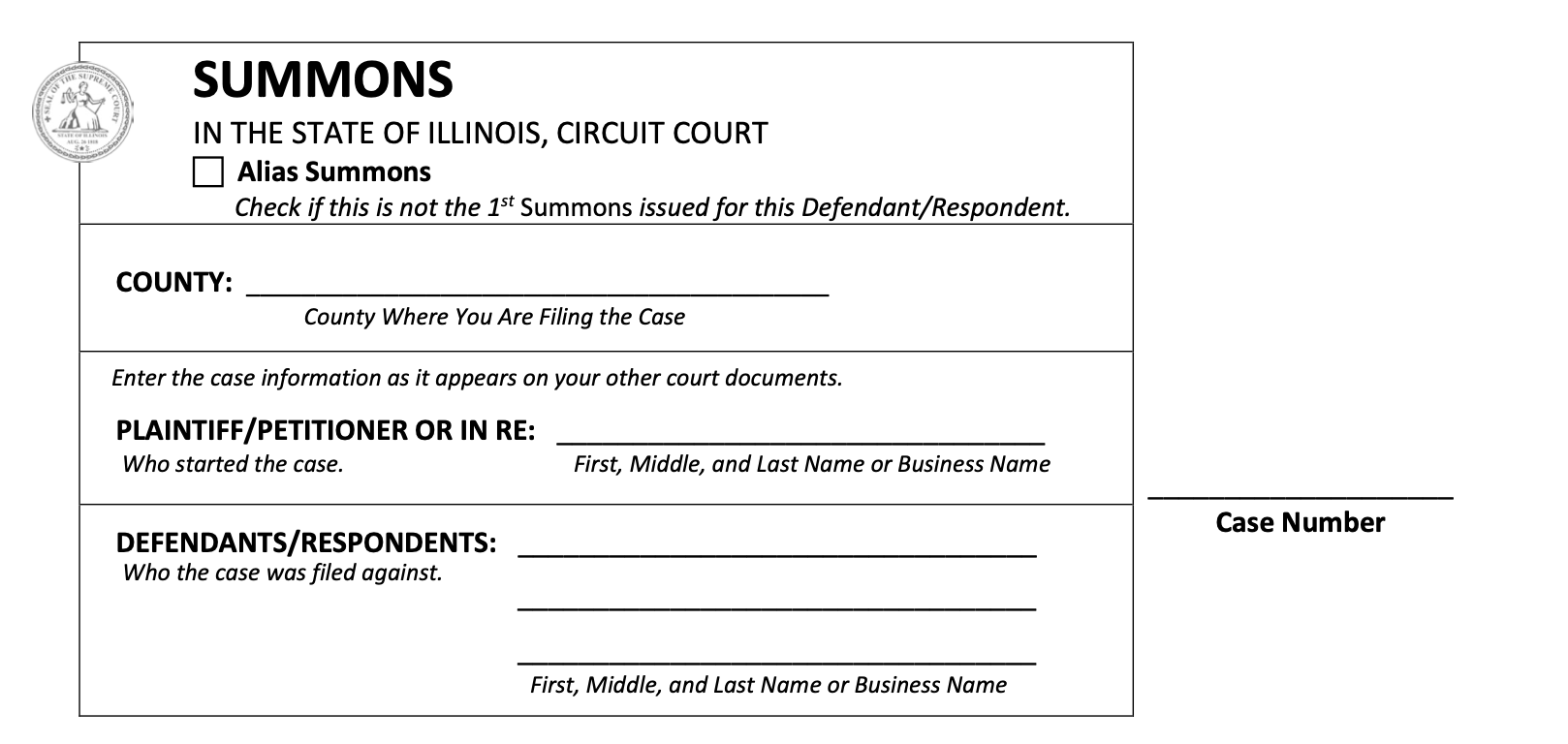
Basic case and party information
At the top of the summons, you will see:
- The name of the court where the case was filed,
- The name of the plaintiff (the company that says you owe them money),
- The name of the defendant (that is you), and
- The case number (this usually starts with the year the case was filed).
Here is an example:
How to respond to the lawsuit
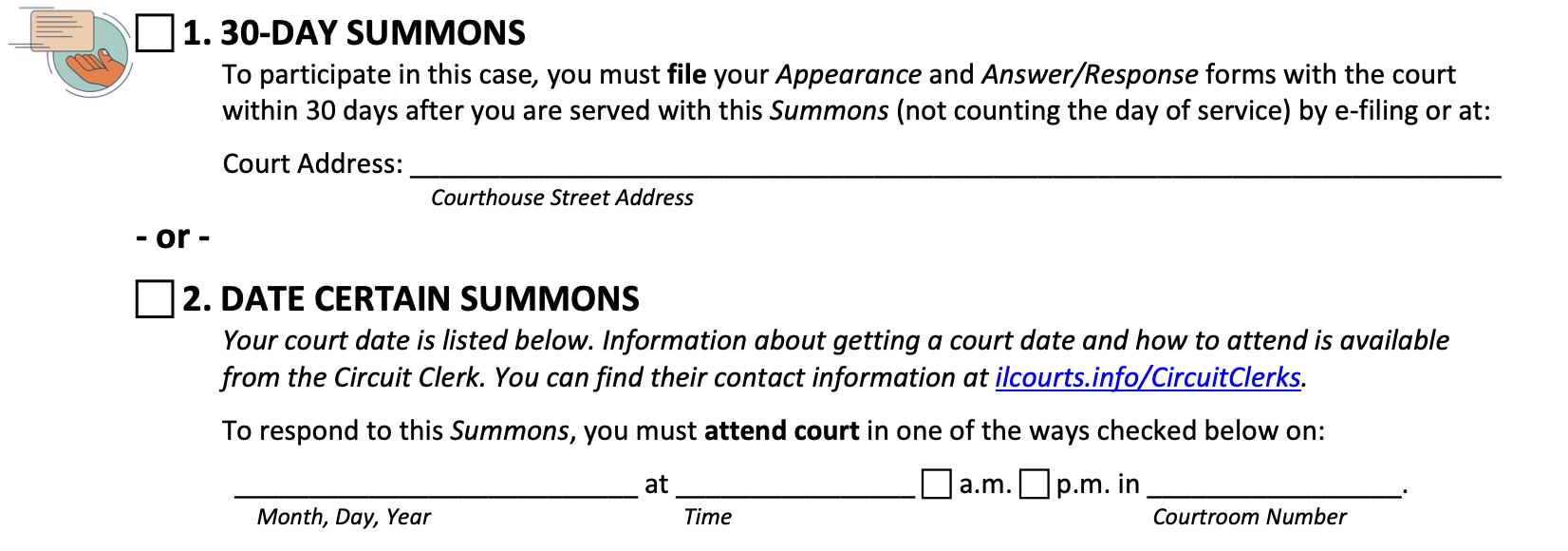
The Summons will tell you whether you need to file court papers or show up to court to respond to the case.
- If you are sued for $50,000 or less, the "date certain" box should be checked. This means that you need to go to court on the date listed.
- If you are sued for more than $50,000, the 30-day summons should be checked. This means that you need to file an answer or motion to dismiss within 30 days.
Here is an example:
Amount of money the debt collector is asking for
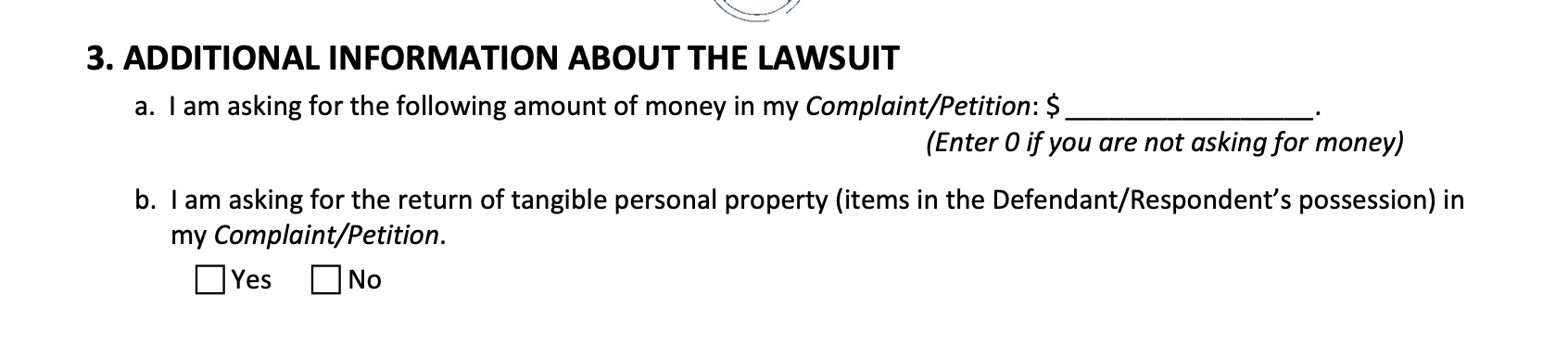
The Summons will show the amount of money that the debt collector is suing you for.
Here is an example:
Contact information for the debt collector
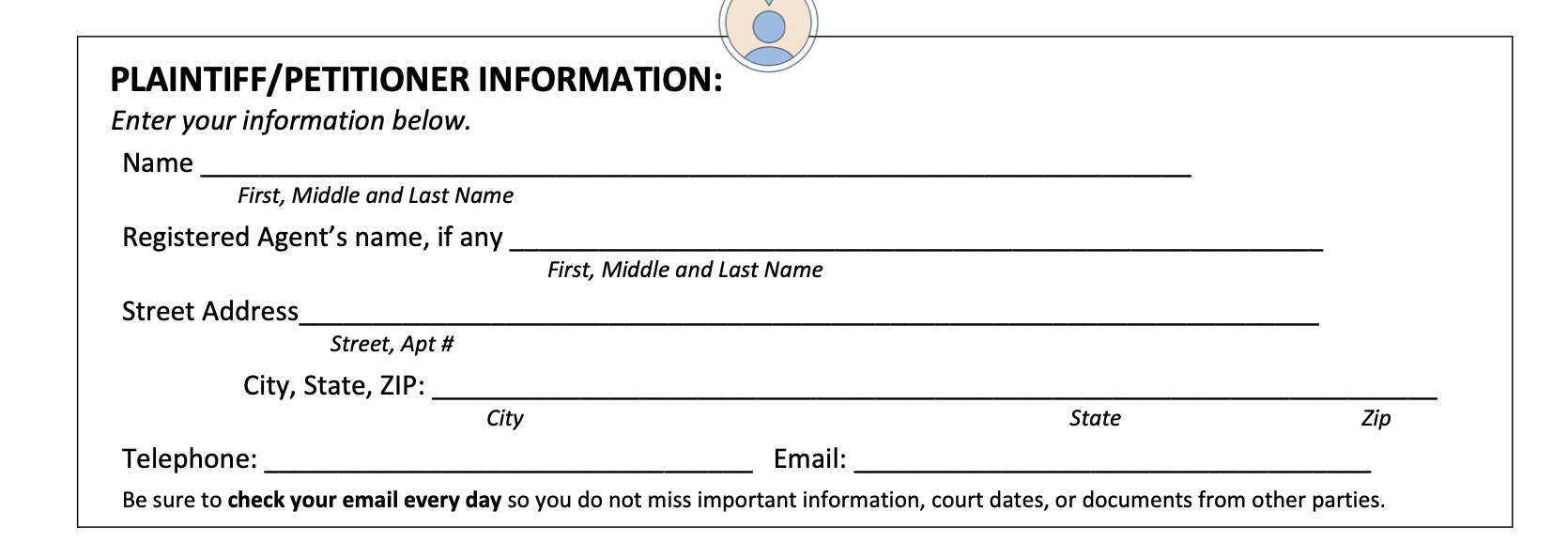
The Summons will show you the address, phone number, and email address for the debt collector.
Here is an example: